

















































Login
Your advantages:
- Du sammelst mit jeder Aktivität XPs. Gear up und erreiche den nächsten Rang!
- Übersicht über Deine Bestellungen und den aktuellen Bestellstatus
- Schnelle & komfortable Bestellung


Modern GPS-based navigation devices offer a variety of uses for cyclists, trekkers, and geocachers. We'll show you what to look for when choosing a GPS device. Incidentally, the Global Positioning System was originally developed by the U.S. Department of Defense in the 1970s, initially for internal purposes only. Fortunately for all civilian and private users, GPS and its satellites are now freely available to everyone. Location accuracy is typically on the order of 10 to 1 meter.
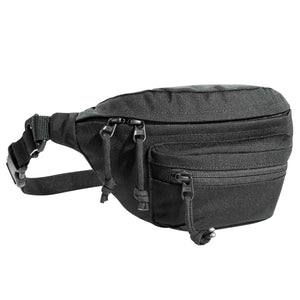
The navigation device's map data should always be up to date. Customer-friendly manufacturers guarantee free map updates with the purchase of a navigation device. Those who use GPS for extended periods should ensure a sufficient power supply. Car cigarette lighter adapters or USB cables for connecting to a computer are worthwhile accessories. Secure attachment to the body, for example with a specially designed case, makes handling the device easier. Despite all security considerations, the GPS device should be easily accessible.
Before choosing a navigation, tracking, or GPS logger system, you should consider what purpose the GPS device needs to serve and in what terrain it will be used. Many models are optimized for drivers and offer a comprehensive overview of the German road network, but this is insufficient for cyclists or trekkers. Large and expensive devices can be equipped with extensive maps at various scales and with different functions; in this case, you might end up paying too much for all the extra features.
From classic route planning and custom route marking to special features like a compass or barometer, many GPS devices offer numerous extras. Before purchasing, you should check the full range of functions to ensure you get the best performance from the device. At the start of a trip or excursion, you should be familiar with all the important functions of the GPS system to avoid difficulties with specific settings while on the go. The more functions you want, the more complex the operation is likely to be, and the more time you should invest in learning how to use the navigation device correctly beforehand. Ultimately, the form factor is a crucial criterion when buying a GPS device. Wristwatch-style systems are compact and convenient, but may make menu navigation more difficult. Larger models are more robust and easier to use, but they have to be carried as additional luggage.
GPS loggers, on the other hand, are devices designed solely for recording a track, i.e., a route. Since they usually lack a display and other functions, their battery life is naturally considerably longer.
When weighing the pros and cons of different GPS models, the addition of a two-way radio should also be considered. Two-way radios offer a reliable communication alternative, especially in areas where GPS signal strength might be weak or in emergencies where direct communication is crucial. They can play an important role in the overall setup, particularly when navigating in remote or difficult terrain.
Here's how: How to navigate by the stars: If no GPS device is available and the constellations are unfamiliar, or the North Star is obscured by clouds, you can still orient yourself by the stars. Any star that lies near a fixed point will work. Suitable fixed points include a stick, a rocky outcrop, or the top of a tree. You need to observe the star directly above the fixed point for a few minutes. Important: Neither you nor the fixed point should move. After just a few minutes, you'll notice that the star is moving relative to the Earth. From this direction of movement, you can roughly determine the cardinal direction:
• Star rises upwards: East
• Star sinks downwards: West
• Star moves to the right: south
• Star moves to the left: North
Note : This type of orientation is an approximation method and only provides a rough indication of the cardinal direction.
Please note that tracking your device indoors is always very difficult, as GPS signals can be blocked. To minimize errors, tracking should ideally take place outdoors. Ensure there are no obstructions in the path. If the navigation function is offline for several hours, all data and settings will need to be recalculated upon restart. This will require more time to establish a satellite connection, which may take several minutes.
Generally, you don't need them anymore. However, a good tour planner isn't limited to just a navigation tool. Maps offer the possibility of alternative routes and contain additional information about the region.
Very dense forests, mountain valleys, and unfavorable satellite positions can interfere with reception. Since the GPS position constantly changes during most activities (tours), the outage is usually only brief, and reorientation is possible immediately.
GPS devices display the immediate surroundings at a variable scale. They always know the way and your current location. You can zoom in and out and don't have to fold them like traditional hiking maps. Further advantages include the ability to read your speed and altitude.
No, he doesn't have to. You can plan a route on your computer and transfer it to the GPS device if you want. You can tell the device to guide you to your destination via the fastest or shortest route, or you can simply use the device as a map.


Gratis Versand ab 99€
In 1-3 Werktagen mit DHL bei dir zu Hause

Ganz ohne Risiko
Top Bewertungen, geprüfter Shop & 31 Tage Zufriedenheitsgarantie

Flexibel zahlen
Zahle sicher und flexibel mit Paypal und Co

Treue wird belohnt
In der ASMC Prime League erhältst Du attraktive Rabatte
Pay securely with:


Secure shipping with:


