












































Login
Your advantages:
- Du sammelst mit jeder Aktivität XPs. Gear up und erreiche den nächsten Rang!
- Übersicht über Deine Bestellungen und den aktuellen Bestellstatus
- Schnelle & komfortable Bestellung




Backpack RU5026 40 L
 Backpacks are one of the main pieces of outdoor equipment.
 The backpacks can be used without any preparation. There are essentially no special considerations. However, reading the instruction manual provides valuable information on the assembly, use, and features/functions of the backpacks, which can differ significantly in some aspects.
Tip: Before using the backpack, it should always be adjusted to the wearer's size. This protects the back and ensures optimal carrying comfort.
Besides its primary function of protecting belongings from the elements, a backpack should also allow its wearer to carry items safely. Organized storage in the various compartments ensures quick and easy access. Before putting on the backpack, make sure all zippers are properly closed.
Before choosing the right backpack, you should consider its design. Backpacks can be used for many different purposes, but a different model might be more suitable for each specific use. For example, the camouflage colors should be matched to the intended use. Effective camouflage is only possible in this way. The second important selection criterion is the size and volume of the backpack. The models in our range have varying capacities and side pockets of different sizes.
In addition to purely functional and practical considerations, when choosing a backpack, it's important to ensure it complements the rest of your clothing. Strong color contrasts can detract from the overall look and reduce the camouflage effect. Don't choose based solely on the manufacturer. We are committed to quality and therefore stock our range exclusively with products from renowned brand manufacturers.
Most backpacks are made of polyester, which provides optimal resistance to external weather conditions such as rain, snow, and sun exposure while backpacking. Backpacks typically weigh around one kilogram, with little variation in weight. Some models feature a removable hip belt and padded shoulder straps. Carrying handles can be advantageous depending on the intended use. Many models have breathable back and shoulder straps to prevent sweat absorption.
Expand your backpack's volume by attaching a MOLLE system. MOLLE is a military system for attaching and carrying equipment and items. The system is extremely versatile and compatible. MOLLE pouches can be attached to any desired position on the backpack. The loops are mounted vertically on the MOLLE webbing, allowing for seamless interlocking of the MOLLE and compression straps.
The list is of course only intended as a suggestion and can be modified depending on circumstances and personal preference.
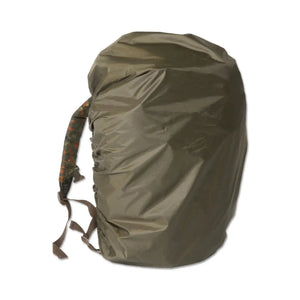
Functional jacket and rain pants, softshell jacket, trekking pants, possibly shorts, fleece/insulated jacket, base layer (T-shirt or shirt, possibly briefs), hiking/trekking socks, hiking/trekking boots, sun hat/cap, beanie or headband, rain cover/waterproof liner, first aid kit, hiking map/guidebook, compass, GPS device, multi-function watch, Swiss Army knife, documents, tickets, sunglasses/glacier goggles, sunscreen, lipstick, mobile phone and, if available, spare battery or portable charger, hydration bladder or bottles, tent (including poles, pegs, ropes), sleeping bag, sleeping mat, stove (possibly with pump), fuel bottle/gas canister, windbreak, 2 lighters, stove, 1 pot with lid, pliers, cup, spoon, toilet paper, water bag (at least 4 liters), water purification/filter, repair kit (for tent, sleeping mat) etc.).
Grab the carrying handle with your left hand and place your right hand under the shoulder strap. Your left foot should be in front of the backpack, with your leg slightly bent. Then, with a sweeping motion, pull the backpack upwards towards you and rest it on your left knee. Release the carrying handle. Reach under the shoulder strap and continue to the bottom of the backpack, then use your right hand to heave the backpack onto your back. Finally, guide your right arm under the shoulder pad, and the backpack is on your shoulders.
There are laundry disinfectants, for example from Sagrotan, but also generic products. You add these to the fabric softener compartment of the washing machine, or you can use the old-fashioned trick with vinegar essence; the vinegar smell dissipates very quickly in the air.
To reduce overall weight, it's not enough to simply buy lightweight gear and throw it in your backpack. Instead, it requires a thorough understanding of your planned trip and a clear grasp of your own abilities, needs, and experience. Why is this? Imagine packing the lightest items of everything, only to realize at the end of your trip that half of what you brought was unnecessary. Achieving the lowest possible weight, therefore, is only possible with careful planning and thoughtful selection of equipment.
You can certainly save some money, see the previous paragraph. But what absolutely must be taken on tour:
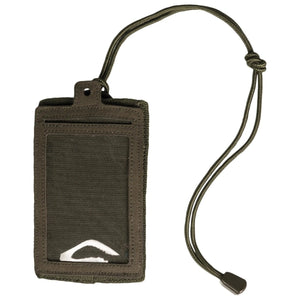
- A document to identify oneself (passport/identity card),
- Debit/credit card and health insurance card (for emergencies),
- Duct tape (adhesive tape),
- Wet wipes and
- Earplugs.
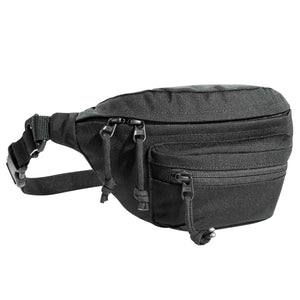
As an alternative to a backpack, various products exist: WEB Gear / LBE (Load-Bearing Equipment) and LCE (Load-Carrying Equipment). All are easy to use and offer a good alternative to a backpack, depending on the intended use.

Gratis Versand ab 99€
In 1-3 Werktagen mit DHL bei dir zu Hause

Ganz ohne Risiko
Top Bewertungen, geprüfter Shop & 31 Tage Zufriedenheitsgarantie

Flexibel zahlen
Zahle sicher und flexibel mit Paypal und Co

Treue wird belohnt
In der ASMC Prime League erhältst Du attraktive Rabatte
Pay securely with:


Secure shipping with:


